TREK GUIDES
Poon Hill Trek: Nepal's Best Short Trek for Beginners
June 8, 2026
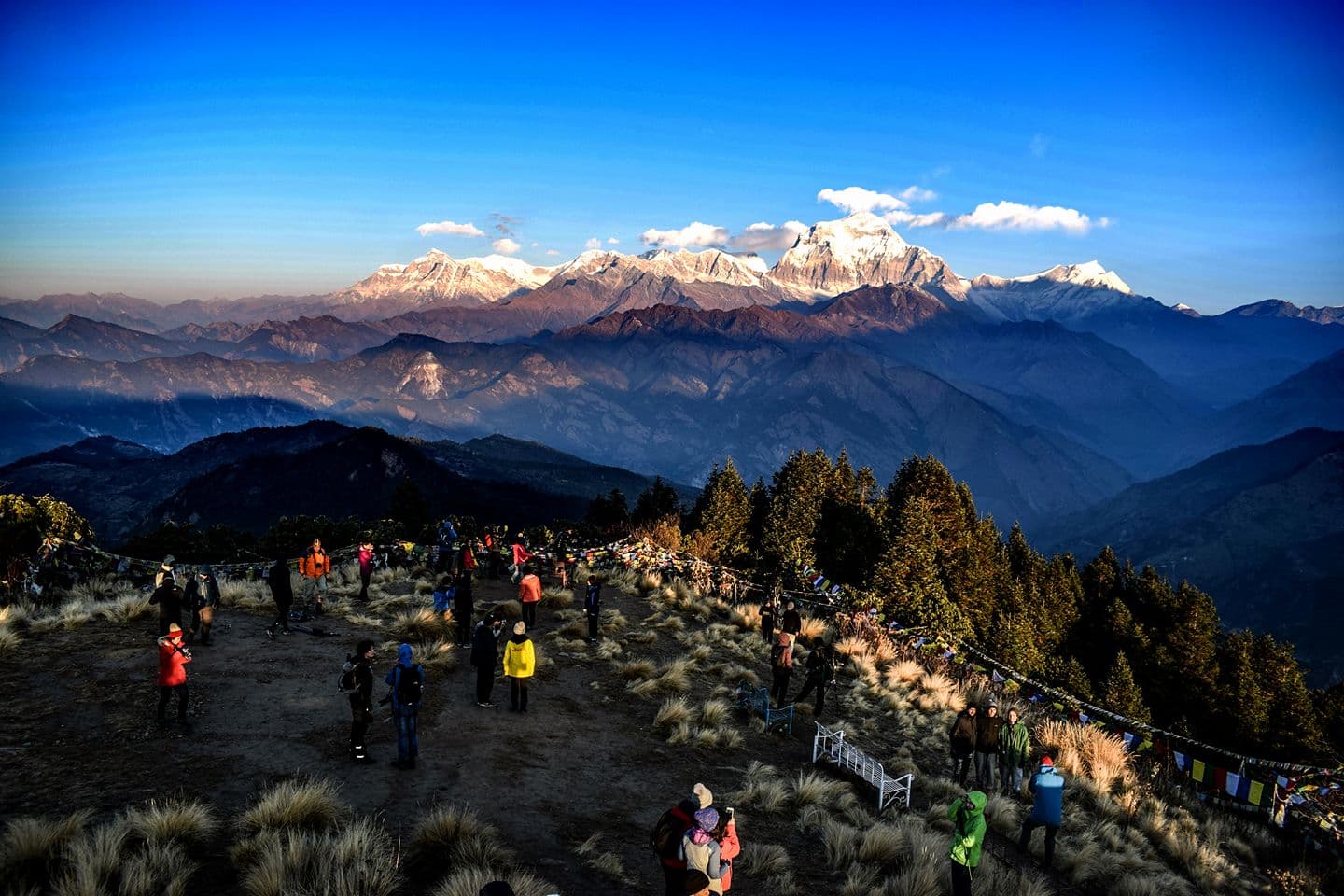
If you want a genuine taste of Himalayan trekking without committing two weeks or crossing a high mountain pass, the Poon Hill trek is very likely the answer, and it's the trek we recommend most often to first-timers, families, and anyone working with a tight schedule. It packs stone-paved trails through rhododendron forest, traditional Gurung and Magar villages, and one of the most famous sunrise viewpoints in Nepal into a trip most trekkers complete in less than a week — all while staying at an altitude low enough that Acute Mountain Sickness is barely a concern.
Our 6-Day Itinerary
We run Poon Hill as a 6-day itinerary out of Pokhara, and the structure is straightforward. After a drive from Pokhara to the trailhead, the route climbs through Ulleri — home to the trek's famous, occasionally cursed stone staircase — before continuing up through forest to the village of Ghorepani, where most trekkers base themselves for the early-morning push to Poon Hill itself. From there, the trail loops back down through Tadapani and Ghandruk, a beautifully preserved Gurung village, before returning to the road and back to Pokhara.
The Sunrise at Poon Hill
The centrepiece is the sunrise from Poon Hill, at 3,210m, and it earns its reputation. On a clear morning you get a genuinely panoramic sweep of the Annapurna range: Dhaulagiri, Annapurna South, Annapurna I, Machhapuchhre (the striking fishtail-shaped peak that's off-limits to climbers), and Nilgiri, all catching the first light at once from a single viewpoint that requires only a short, steep pre-dawn walk to reach. It's one of the best payoff-to-effort ratios of any viewpoint in the Nepal Himalaya.
How Hard Is It?
In terms of difficulty, Poon Hill is honestly rated for a reason: the walking itself is manageable, but the stone staircases — particularly the long climb up to Ulleri — are relentless in a way that catches people off guard. There's no technical terrain and no altitude above roughly 3,210m, which keeps AMS risk low, but reasonable leg fitness and a tolerance for a lot of steps make a real difference to how much you enjoy the days. It's a trek that rewards a bit of pre-trip stair training more than most people expect.
Because the highest point sits well under the altitude where serious mountain sickness typically begins, Poon Hill is one of the safest treks in Nepal from an altitude standpoint, which is exactly why it suits first-timers, older trekkers, and travellers who want mountain views without the acclimatization schedule that longer treks require. It's also a smart warm-up: several of our clients use it as a short trip the year before attempting Everest Base Camp or the Annapurna Circuit, simply to get a feel for teahouse life, daily trekking rhythm, and their own pace on the trail.
Best Season
Best season follows the same pattern as the rest of the Annapurna region: autumn (late September to November) and spring (March to May) offer the clearest views and the most reliable weather, with spring adding the bonus of rhododendron forests in full bloom along much of the route — Nepal's national flower, and genuinely spectacular in April. Winter is doable and much quieter, though you should expect cold mornings at Ghorepani and Poon Hill itself. Monsoon season brings daily rain and largely obscured views, so it's the one time of year we'd steer most trekkers away from this route.
If you have a bit more time, Poon Hill combines naturally with other short treks in the same region rather than standing alone. Extending through Ghandruk for an extra night, or combining it with the Mardi Himal trek on a longer trip, is a popular way to see more of the Annapurna foothills without the multi-week commitment of the full Annapurna Circuit. It's also easy to pair with a few relaxed days in Pokhara itself, right on Phewa Lake, before or after the trek.
Permits
Permits are simple compared to some of Nepal's more remote regions: you'll need an Annapurna Conservation Area Permit and the trekking information management card that applies nationally, both of which we arrange for clients as part of booking. As with every mountain region in Nepal since April 2023, a licensed guide is compulsory on this route too, even though the trek is short and the trail well-marked — the rule applies regardless of trek length or difficulty rating.
Packing for Poon Hill is noticeably lighter than for a high-altitude trek. You'll still want proper broken-in boots given the amount of stone steps, a warm layer for the pre-dawn summit push (mornings at Ghorepani can be genuinely cold even in season), and a light rain shell, but you can leave the expedition-weight down jacket and serious cold-weather gear at home. Teahouses along the route are comfortable and well-established, with hot showers and varied menus available at most stops, since this is one of the most developed trekking corridors in the Annapurna region.
Day-by-Day Breakdown
Day by day, the rhythm is gentler than most Himalayan itineraries. Day one is usually a drive from Pokhara to Nayapul followed by a few hours of walking to Tikhedhunga or Ulleri; day two tackles the bulk of the famous stone staircase up to Ghorepani, arriving with time to rest before the cold sets in. Day three is the early alarm for Poon Hill at dawn, followed by a longer descent through forest toward Tadapani, and the final days wind down through Ghandruk and back to the road, with plenty of time to enjoy the villages rather than rushing through them. It's a trek where the days genuinely get easier as they go, which suits nervous first-timers far better than a route that saves its hardest day for last.
The morning of the Poon Hill climb itself is worth planning around rather than treating as routine. Most groups leave Ghorepani in the dark, headlamps on, around an hour before sunrise, since the viewpoint fills up during the short autumn and spring peak weeks and a slightly earlier start guarantees a good vantage point. Bring a warm layer for the summit itself even if the walk up has you sweating — temperatures at 3,210m before dawn are genuinely cold regardless of season, and the wait for the light to hit the peaks can take twenty minutes or more once you've arrived.
The forest you walk through on the way up is a big part of the trek's appeal, not just a means of getting to the viewpoint. The trail between Ulleri and Ghorepani passes through dense rhododendron forest — Nepal's national flower and, in a good spring year, an almost solid wall of red, pink and white blooms through April — mixed with oak, magnolia, and bamboo stands that shelter langur monkeys and a genuinely impressive range of birdlife for anyone who packs binoculars. Even outside bloom season, the forest itself is one of the more scenic stretches of any short trek in Nepal, cool and shaded in a way that makes the stone steps easier to tolerate.
Group logistics on Poon Hill are simple compared to longer or more remote treks. Because the route is short, well-serviced, and doesn't require camping equipment, it's easy to arrange as a small private group or even just for two people, without needing to hit a minimum headcount the way restricted-area treks like Upper Mustang do. Most trekkers also don't need a dedicated rest day anywhere on the itinerary, since the altitude stays low enough that the usual acclimatization planning simply doesn't apply here the way it does on Everest Base Camp or the Annapurna Circuit.
Poon Hill vs. Mardi Himal
It's a fair question whether Poon Hill and Mardi Himal, Annapurna's other classic short trek, are redundant with each other, and they're really not — they suit slightly different appetites. Poon Hill is gentler, more village-focused, and entirely on well-established teahouse trail, making it the easier of the two to recommend without reservation to true beginners. Mardi Himal, which we also run as a 6-day trip, climbs higher (up to around 4,200m) to a dramatic close-up viewpoint of the Annapurna and Machhapuchhre massifs, with a more remote, forested feel and a genuine — if still manageable — taste of higher-altitude trekking. Trekkers who've already done Poon Hill often come back specifically for Mardi Himal as the natural next step up.
Do You Need a Guide?
One question we get often: can you do Poon Hill without a guide, given how short and well-marked it is? No — the same rule that applies to Everest Base Camp and the Annapurna Circuit applies here too, without exception for trek length or difficulty. In practice this rarely feels restrictive on a trek this well-established, since a local guide adds genuine value anyway: pointing out viewpoints and village history you'd otherwise walk straight past, arranging rooms during a busy autumn week, and generally making a short trip feel considered rather than rushed.
For families travelling with older children, trekkers recovering from a longer trip who want something gentler, or anyone who simply doesn't have two weeks free but still wants a real Himalayan trekking experience, Poon Hill is close to the ideal fit. It delivers genuine mountain scenery, cultural villages, and one of Nepal's best-known sunrise views, all within a manageable week and without the altitude planning that longer treks demand — which is exactly why it remains one of our most-booked short itineraries year after year.